
archive
     
  • Home
  • Member
  • Publication
  • Software
  • Contact
img

img

 
  • SimFlu: simulation tool for influenza virus
  • http://lcbb.snu.ac.kr/simflu/index.html by Insung Ahn & Ha-Yeon Kim

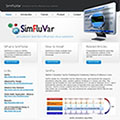
  • SimFlu stands for “a Simulation tool for influenza virus”, and it performs the sequence simulations using the codon variation patterns of influenza A viruses over time. This program can be installed on Linux and Macintosh OS X as well as Windows XP
    or 7, and it automatically searches the various types of input files from user input folder of working directory. SimFlu is freely available from the ‘PRODUCT’ in SimFlu homepage. You may download the compressed SimFlu files for your operating systems.

  • img

     
  • SimFluVar: simulation tool for influenza virus variation
  • http://lcbb.snu.ac.kr/simfluvar/index.html by Insung Ahn & Jin-hwa Jang

  • SimFluVar program is analytic software for calculating genomic variation among each other influenza virus group also series of SimFlu(Simulation tool for influenza virus). It is possible that calculating 61 x61 variation matrix that extracts the pattern of change the genetic material information of the influenza virus revealed actual experiments by year using SimFluVar. The results of generated by SimFluVar shows the pattern of change in level of codons along the flow time for a group of influenza virus generated by year. Although provide an analysis of the changes in the base composition of the wobble base position in the within each codon. Also, SimFluVar added visualization capabilities that can be used to confirm the distribution visually immediately for all calculated results of the matrix type and edit. The calculation process specific described in detail in the part of the tutorial.

  • img

     
  • PSSTA
  • by Se-Eun Bae


  • img

     
  • TorsWebDB
  • http://lcbb3.snu.ac.kr/TorsWebDB/index.html by Sunghoon Jung


  • img

     
  • SDG
  • http://lcbb3.snu.ac.kr/SDG/index.html by Bo-Ran Kim


  • img

     
  • FGMD: fungal genetic marker database
  • http://lcbb3.snu.ac.kr/FGDB/index.html by Jin-hwa Jang

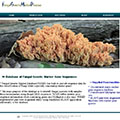
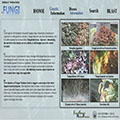
  • FGMD was built to provide sequence data for the classification of fungi while especially concerning marker genes. The main purpose of the database is to identify fungal sspecies with samples from environments using fungal DNA sequences. FGMD offers marker gene sequence information while combining genes into Multigene is also easy. FGMD implemented pair-wise alignment utility using standalone BLAST application addtionally to the database.

  • img

     
  • PPVF: periodontal pathogen virulence factor database
  • http://lcbb3.snu.ac.kr/ppvf/index.html by Yeon-Jeong Song

  • PPVF was built to provide sequence data for the classification of clinically correct periodontal pathogen while especially concerning virulence factor genes as genetic marker. The main purpose of the database is to find new periodontal pathogen from human oral microbials that is regarded as they have no relation with periodontal disease. PPVF implemented pair-wise alignment utility using standalone BLAST application addtionally to the database.

  • img

     
  • BWBD: bioinformatics with biomarker database
  • http://lcbb3.snu.ac.kr/BIOMARKER/Main.html by Mikyung Je

  • BWBD that was specialized for cancer and biomarkers was constructed for efficient data collection and management. The constructed database was designed for academic utilization, and cancer-related genes (oncogene, proto-oncogene, tumor suppressor gene) and protein biomarkers were manipulated for research purposes from large public data storage.

  • img

     
  • OVDB: oncolytic virus databank
  • http://lcbb3.snu.ac.kr/OVDB/index.html by Myeongji Cho

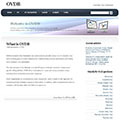
  • OVDB is a web-based databank for providing information of various viruses and oncolytic viruses including sequence data. It can be used for understanding oncolysis mechanisms and finding novel oncolytic virus candidates. The main purpose of this database is to identify genetic variables which give viruses cancer-specific killing abilities. Bioinformatics utilities and computational tools are also available in OVDB allowing researchers to analyze biological and genetic data either of OVDB or user's own.

  • img

     
  • FVF: fungal virulence factors
  • http://lcbb3.snu.ac.kr/FungiVir/main20150105.html by Hyerin Park

  • The database of FVF suggest cornorstone of the whole fungal research program. This database want to make a useful standards for current sporadic fungal genetic results and to investigate their similarities and differences. Furthermore this database would build mycoses computer software and database for use in gene analysis to interpret and plan safety measures against for fungal infections.

  • img

     
  • PMO: pathogenic microorganism
  • http://lcbb.snu.ac.kr/pmo/index.html by LCBB (2013)

  • The PMO database contain data on pathogenic microorganism genetic sequences, including parasite, virus, fungus, bacteria that are severe infection disease for human. Additional information include host genetic data related immune system during infected pathogen to human. PMO database provide systemic analysis between each pathogene and human immune cell. Also, it can be computational simulation that predict evolutionary pattern of microorganism using SimFlu.

  • img

     
  • KODES: korean open source database for epidemic simulation
  • http://lcbb.snu.ac.kr/kodes/index.html by LCBB (2014)

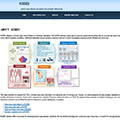
  • KODES database is Korean Open source Database for Epidemic Simulation. The KODES database contain data on open government data including data set, open api and census data. Also, parameter extract based on these open source data for epidemic modelling. Additional information include epidemic simulation that can be predict for pandemic situation include influenza and ebola virus.

  • img

     
  • KODES2: korean open source database for epidemic simulation 2
  • http://lcbb.snu.ac.kr/Kodes_ver2/index.html by LCBB (2015)

  • KODES2 database is Korean Open source Database for Epidemic Simulation.